Tectonic 3D Materials for UltiMaker: Filament Guide

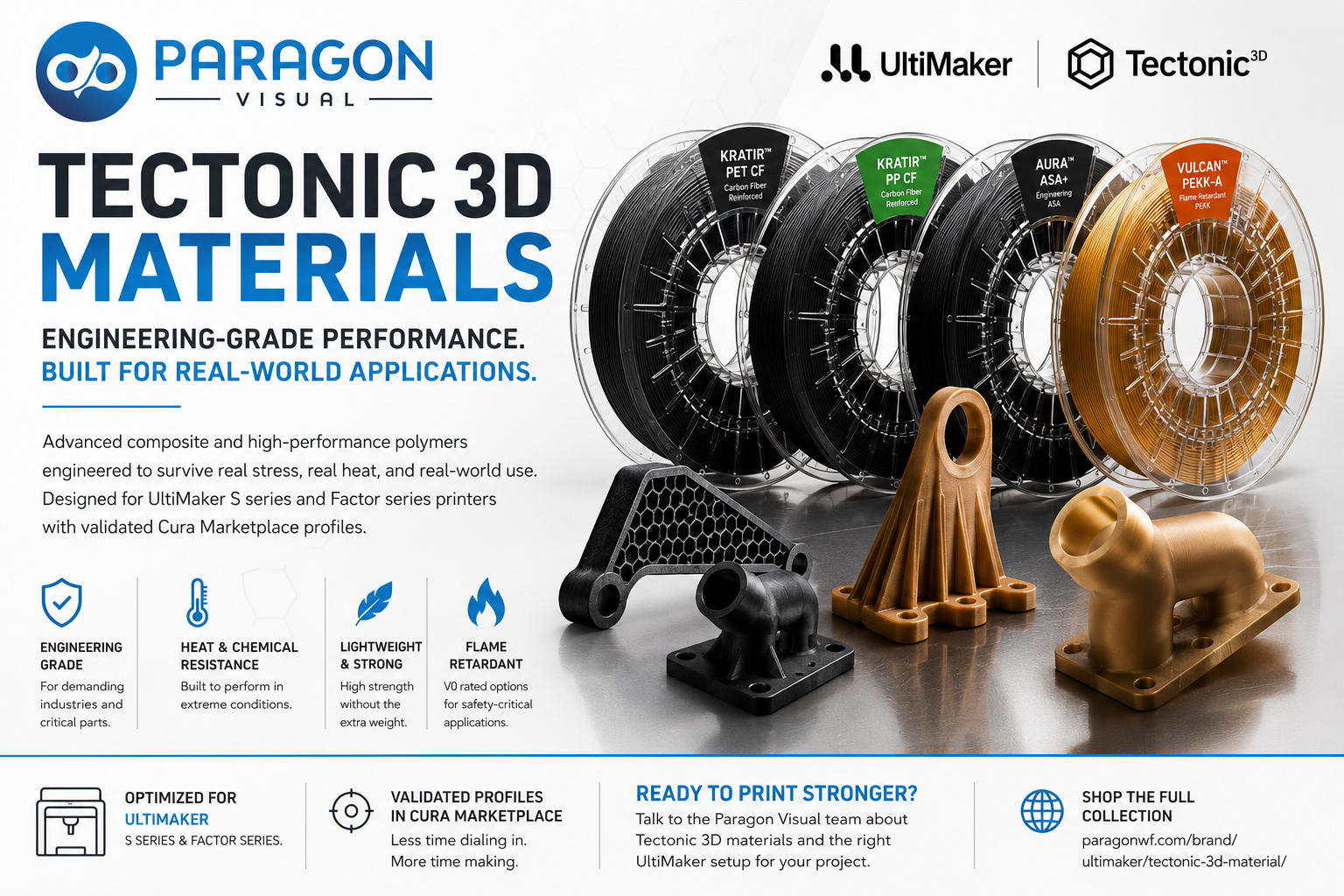
Tectonic 3D materials bring engineering-grade performance to your UltiMaker S series and Factor series printers. These are not everyday desktop filaments. They are composites and high-performance polymers built for parts that have to survive real stress, real heat, and real-world use.
As an authorized UltiMaker dealer, Paragon Visual helps engineers, manufacturers, and educators match the right grade to the job. Below, we break down what these materials are, the four grades we now stock, and how to choose between them.
What Are Tectonic 3D Materials?
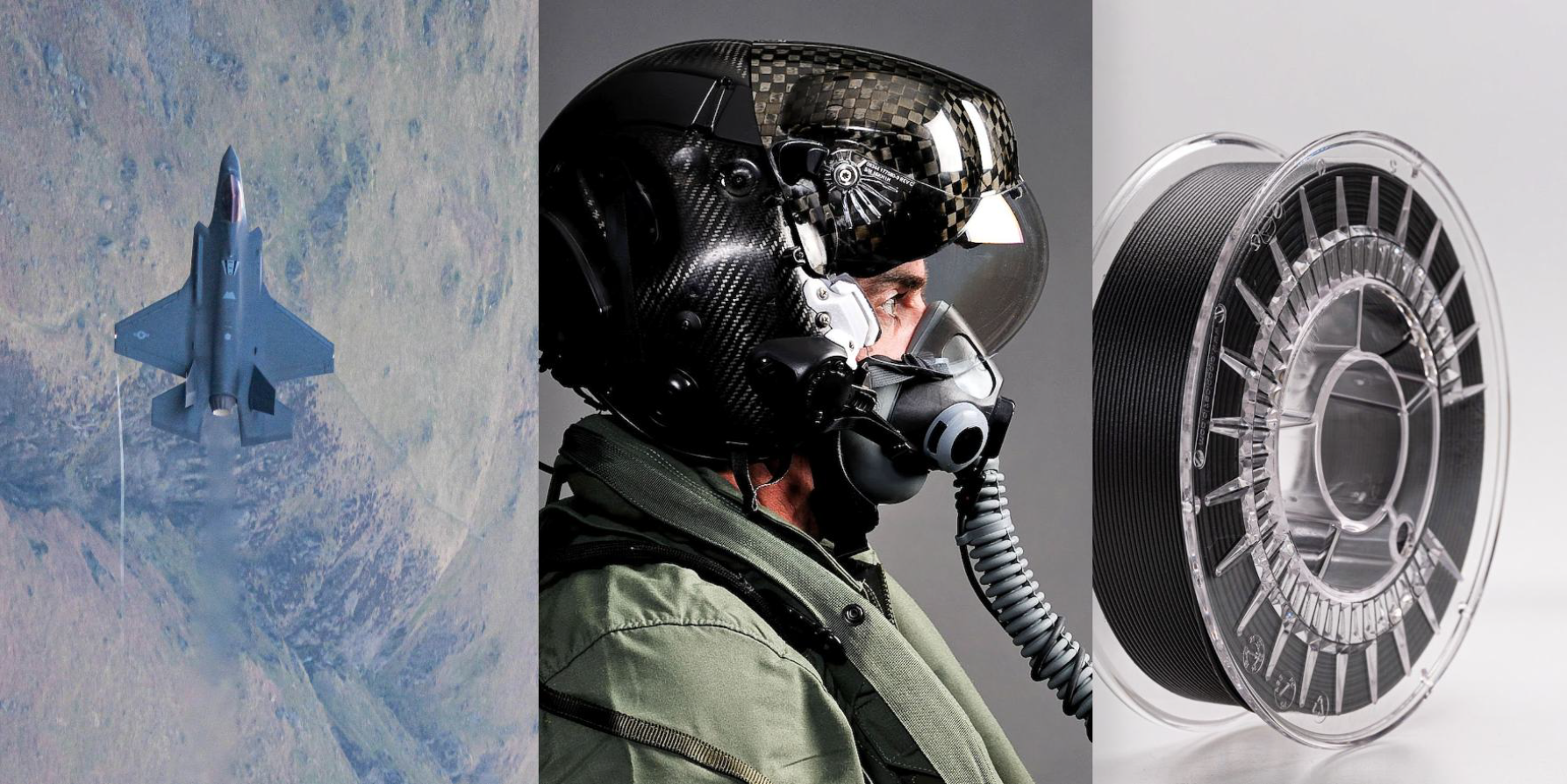
Tectonic 3D develops its filaments at the molecular level to fill the performance gap where standard thermoplastics fall short. Instead of general-purpose plastics, the company formulates materials for sectors that need certified or performance-critical parts, including aerospace, defense, energy, transportation, and industrial manufacturing.
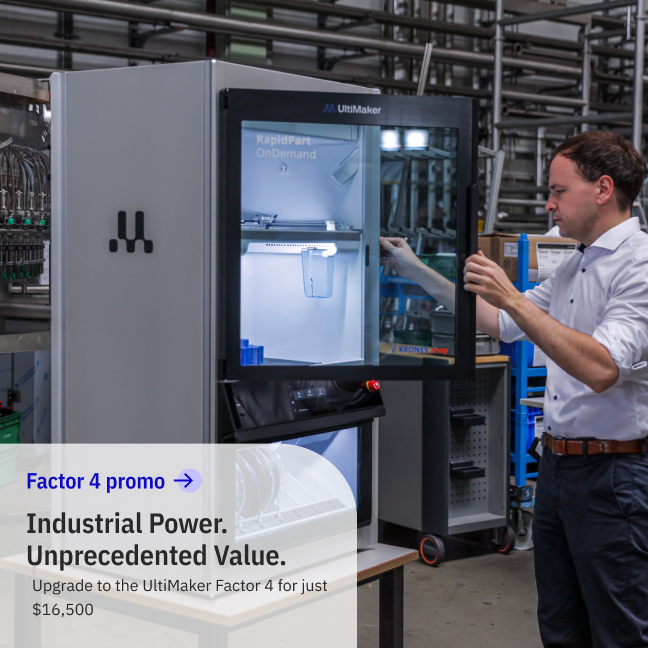
Here is why this matters for UltiMaker owners. As of April 2026, UltiMaker is the exclusive distributor for Tectonic 3D across North and South America. These filaments run on UltiMaker S series and Factor series printers with validated Cura Marketplace print profiles, so you spend less time calibrating and more time producing parts.
Tectonic 3D Material Families
- KRATIR Series: Carbon fiber reinforced polymers, such as PET CF and PP CF, for very high stiffness, strength, and heat resistance
- AURA Series: Everyday engineering filaments, such as ASA+, for durable, reliable parts
- VULCAN Series: High-temperature, flame-retardant filaments, such as PEKK, for parts that must meet fire-safety standards
- ANASA Series: Flexible TPC materials for parts that need pliability and durability
The Four Tectonic 3D Materials in Stock at Paragon
We currently carry four grades, each solving a very different problem. Here is what each one does best.
KRATIR PET CF: High Strength and Dimensional Stability
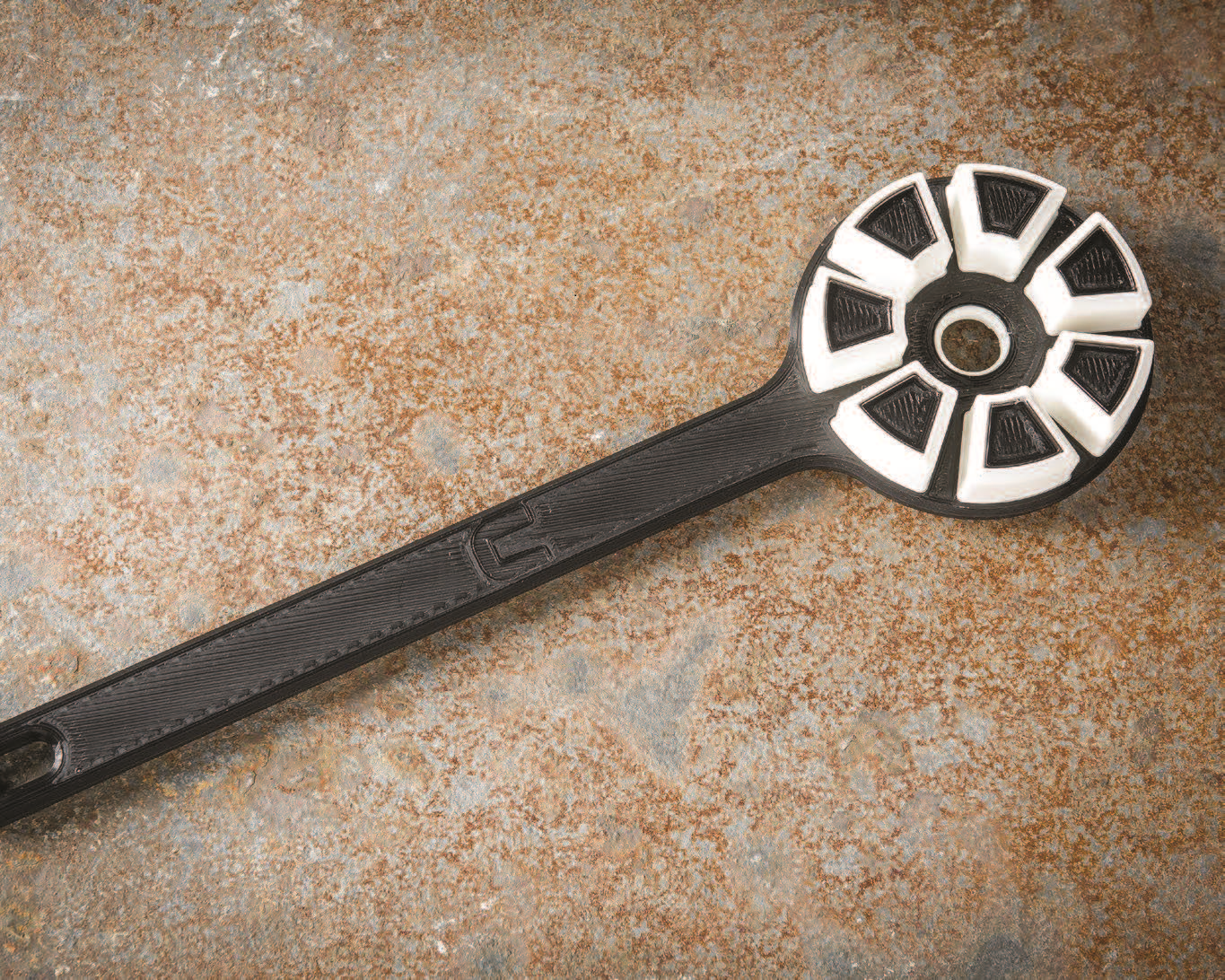
KRATIR PET CF is a carbon-fiber-reinforced PET built for stiffness and shape retention. It offers a tensile modulus around 9600 MPa, low creep, and a heat deflection temperature near 205°C, so parts hold their geometry under load and heat. That stability makes it a strong pick for tooling that has to stay true over time.
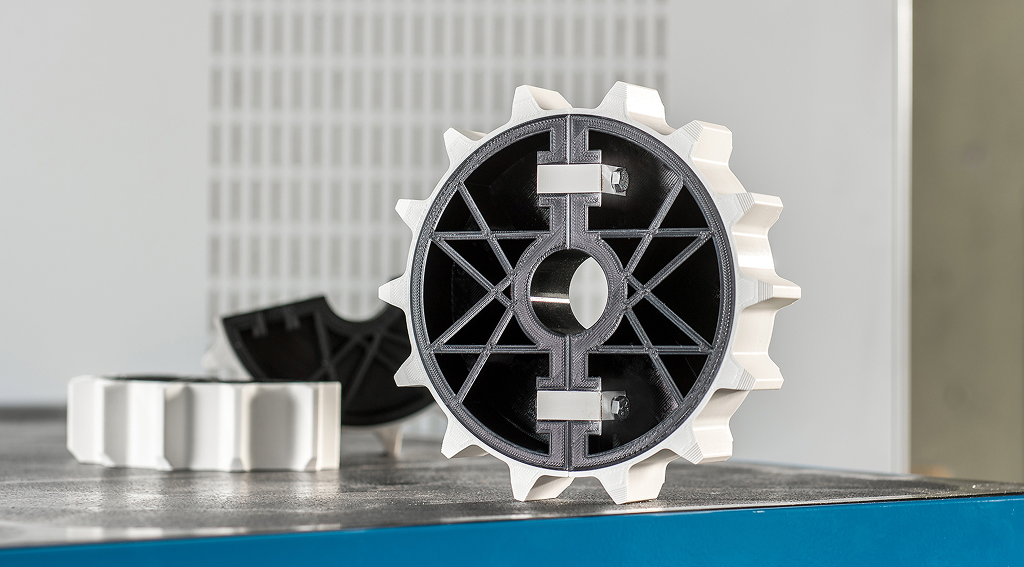
Best for: jigs and fixtures, structural brackets, tooling, and functional parts that see heat and stress.
KRATIR PP CF: Lightweight, Strong, and ESD Safe
KRATIR PP CF pairs a carbon-fiber reinforcement with a polypropylene base, so you get very high stiffness at a low density of just 1.07. It prints fast, resists chemicals thanks to its PP backbone, and is ESD safe for sensitive electronics work. When weight savings and chemical resistance both matter, this is the grade to reach for.
Best for: lightweight structural parts, chemical and fluid handling, ESD-sensitive fixtures, and automotive components.
AURA ASA+: Weatherproof Parts With Low Warping
AURA ASA+ is the outdoor workhorse of the group. It delivers outstanding UV resistance, excellent bed adhesion, and noticeably less warping than traditional ABS. It also prints at high speed and does not require a hardened nozzle, which makes it the most approachable grade in the lineup.
Best for: outdoor enclosures, signage, automotive exterior prototypes, and any part that lives in the sun.
VULCAN PEKK-A: Flame-Retardant and Heat Resistant
VULCAN PEKK-A is the specialist. This amorphous PEKK is flame retardant to UL V0 at 0.8 mm and carries EN45545 R1 HL2 and FAR 25.853 approvals, the flammability standards used in rail and aerospace interiors. With a glass transition near 158°C and strong chemical resistance, it handles environments where most filaments cannot compete. It does require a high-temperature-capable printer, which we cover below.
Best for: aerospace and defense interiors, rail components, and flame-safety-critical or high-heat parts.
Tectonic 3D Materials at a Glance
| Material | Base Polymer | Standout Property | Nozzle Temp | Bed Temp | Best For |
|---|---|---|---|---|---|
| KRATIR PET CF | PET / Carbon Fiber | Stiffness and heat stability | 275°C | 100°C | Tooling, brackets, fixtures |
| KRATIR PP CF | PP / Carbon Fiber | Light, strong, ESD safe | 260°C | 60°C | Lightweight, chemical-resistant parts |
| AURA ASA+ | ASA | UV resistance, low warp | 250°C | 90°C | Outdoor parts and enclosures |
| VULCAN PEKK-A | PEKK (amorphous) | Flame retardant, heat resistant | 380°C | 160°C | Aerospace, rail, high-heat parts |
Values are the manufacturer’s recommended starting points. Always confirm the current Tectonic 3D data sheet and print profile for your setup.
Which UltiMaker Printers Run Tectonic 3D Materials?
These filaments are optimized for the UltiMaker S series and Factor series, with validated profiles in the Cura Marketplace to shorten setup. A few hardware notes will save you headaches:
- Carbon-fiber grades (KRATIR PET CF and PP CF) are abrasive, so they need a hardened steel nozzle, typically 0.6mm or larger. Our UltiMaker PET CF filament guide covers this setup in more detail.
- AURA ASA+ is the easiest to run and works with a standard 0.4mm nozzle.
- VULCAN PEKK-A needs a printer capable of very high nozzle, bed, and chamber temperatures. It is not a fit for entry-level desktop hardware.
Not sure your printer is ready? Browse our UltiMaker materials at Paragon and reach out for help matching hardware to the material you plan to run.
How to Choose the Right Tectonic 3D Material
Start with the demand your part has to meet, and the choice gets simple:
- Need maximum stiffness and heat stability? Go with KRATIR PET CF.
- Need strength with minimum weight, or ESD safety? Choose KRATIR PP CF.
- Building something for the outdoors? AURA ASA+ handles UV and weather.
- Facing high heat or flame-safety requirements? VULCAN PEKK-A is built for it.
Why Buy Tectonic 3D Materials From Paragon Visual
Paragon Visual is an authorized UltiMaker dealer, so every Tectonic 3D filament you buy comes with knowledgeable guidance on print profiles, hardware pairing, and real-world application questions, all backed by U.S. based support. Whether you are qualifying a new material or expanding an existing fleet, our team helps you get reliable results.
Browse the full Tectonic 3D materials collection, or find validated print profiles in the Cura Marketplace.
Talk to the Paragon Visual team about Tectonic 3D materials and the right UltiMaker setup for your project.